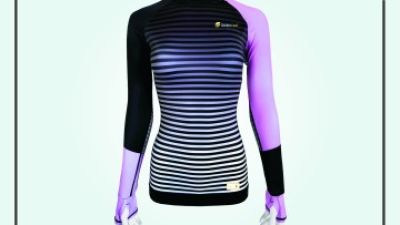
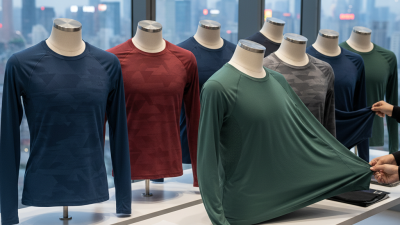
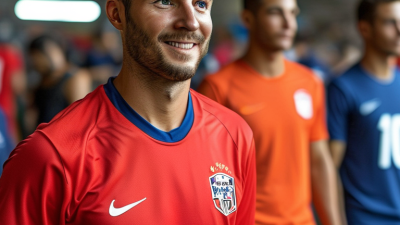
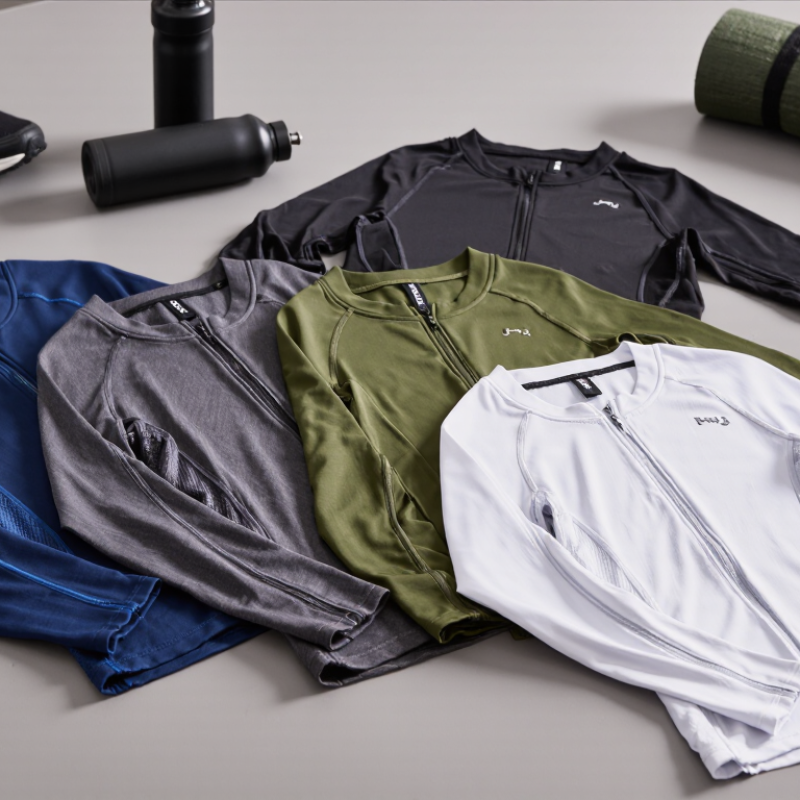
More and more global buyers are paying close attention to what really matters—comfort, performance, durability, and responsible sourcing. That’s where the Athletic Long Sleeve shirt comes in handy. It’s a simple but practical piece that checks all those boxes. It helps shield your arms from sunlight, chilly air, light winds, and those unpredictable training conditions. Plus, it’s versatile—you can wear it while running, hiking, hitting the gym, playing team sports, or even just running errands during the day.
Yvon Chouinard, the guy who started Patagonia and is kind of a legend in outdoor gear circles, once said, “The best thing you can do for the planet is buy less.” That message really hits home for international buyers, doesn’t it? A well-made Athletic Long Sleeve can last longer, which means fewer replacements and more thoughtful shopping. It’s smart to look into stuff like fabric recovery, stitching quality, moisture-wicking, and how well the color holds up before placing big orders. Options like recycled polyester, organic cotton, and tech blends each bring their own benefits—but honestly, none are perfect. That’s something honest discussions need to cover.
Getting the fit right is often tricky, though. Body shapes, climate preferences, and sizing standards vary so much from one market to another. A long sleeve that’s super breathable in London might feel way too warm in Singapore. So, it’s a good idea for buyers to ask for size charts, fabric samples, test reports, and wash-test results. Also, checking packaging options, factory consistency, and communication timelines can tell you a lot—maybe more than those glossy product images.
Great suppliers don’t promise the moon—they’re upfront about what they can and can’t do. They share traceable specs and realistic timelines, which builds trust with distributors, retailers, sports teams, and private brands alike. For buyers around the world, the Athletic Long Sleeve isn’t just another piece of clothing—it’s a versatile product that calls for careful evaluation, solid evidence, and ongoing improvements. It’s all about making smarter choices and staying flexible.
Defining Athletic Long Sleeve Shirts Through Global Apparel Standards
Athletic long sleeve shirts are defined by more than stretch and a sporty appearance. Global apparel standards examine fiber content, colorfastness, seam strength, care labels, and restricted substances. These details help buyers compare products across markets with fewer misunderstandings. A shirt labeled with accurate polyester and elastane percentages is easier to evaluate during import planning.
Fit also requires measurable discipline. A reliable size chart should show chest width, body length, sleeve length, and tolerance ranges. Small differences can matter. For Biking Long Sleeve Shirts, buyers may check sleeve coverage, cuff recovery, reflective details, and fabric breathability. Flat seams can reduce rubbing under a backpack or cycling jersey. A fabric test may also measure moisture management and ultraviolet protection, where applicable.
Packaging and documentation support professional purchasing decisions. Test reports should identify the sample, testing method, and date. Care instructions need clear symbols and readable language for the intended market. I have noticed that buyers sometimes trust a polished sample too quickly. That is risky. One approved shirt may still hide inconsistent stitching or uneven dye lots in production. Standards improve reliability, but they do not replace inspection. Human judgment remains necessary, and it is not always perfect. A practical review should examine the garment after washing, stretching, and repeated wear.
UPF 50+ Fabric Blocks at Least 98% of UV Radiation Under ASTM D6603
Why Athletic Long Sleeve Shirts Are Ideal for Global Buyers?
UPF 50+ Fabric Blocks at Least 98% of UV Radiation Under ASTM D6603
For global buyers, sun protection is a practical feature, not decorative wording. UPF 50+ fabric allows no more than 2% of ultraviolet radiation to pass through. That means it blocks at least 98% under the stated testing conditions. A compliant claim should be supported by reliable fabric testing and accurate labeling aligned with ASTM D6603.
In real use, a shirt can protect a worker on a bright construction site or a runner beside a coastal road. Moisture Wicking Uv Long Sleeve Shirts help move sweat away from the skin during humid travel. The long sleeves also reduce direct exposure on the forearms. Small details matter. A close but comfortable fit limits loose gaps, while a smooth surface feels better under a backpack.
However, UPF performance is not permanent. Stretching, heavy wear, stains, and repeated washing may change fabric coverage. Wet fabric can also behave differently, depending on its construction. No garment is perfect. Buyers should request test reports, care instructions, fiber details, and performance data after laundering. They should also check sizing across regional markets. This step is easy to overlook. A shirt that fits poorly may expose more skin, even when the original fabric achieved UPF 50+. Reliable suppliers should explain these limits clearly instead of promising total sun protection.
Moisture-Wicking Performance: ISO 11092 Measures Textile Moisture Transfer
Why Athletic Long Sleeve Shirts Are Ideal for Global Buyers?
For global buyers, an athletic long sleeve shirt must perform beyond a product photograph. During product inspections, I check fabric recovery, seam comfort, and drying behavior after washing. Moisture-wicking performance matters because climates and activity levels vary sharply between markets. A shirt that feels dry indoors may become heavy during humid outdoor training.
ISO 11092 provides a useful technical reference. The test measures thermal resistance and water-vapour resistance under controlled sweating conditions. A sweating guarded hotplate simulates heat and moisture moving through the textile. Lower water-vapour resistance generally indicates easier moisture passage and better breathability. Buyers should review the actual test report, not only general claims. Test conditions, fabric layers, and sample preparation can affect results.
The method has limits. ISO 11092 does not directly measure liquid sweat absorption, drying speed, or garment fit. That matters. A fabric may transmit vapor well but still feel wet against the skin. I would compare laboratory data with wash tests, movement trials, and climate-specific feedback. Inspectors can check whether the shirt stays comfortable under backpacks, near the elbows, and around the cuffs. Small details often decide repeat orders. My own evaluations are not perfect, either; laboratory performance cannot fully recreate every runner, worker, or weather condition.
Why Athletic Long Sleeve Shirts Are Ideal for Global Buyers?
Moisture-wicking fabrics help move perspiration away from the skin, while ISO 11092 measures water-vapour resistance (Ret). Lower Ret values indicate easier moisture-vapour transfer and better breathability. The thresholds below follow the commonly used EN 343 interpretation of ISO 11092 results.
How to read the chart: A lower water-vapour resistance value means that heat and moisture can escape more easily, which supports comfort across different climates and activity levels.
Thermal Regulation Across Climates: 1 clo Equals 0.155 m²·K/W
Athletic long sleeve shirts are practical for global buyers because climates change quickly. Their thermal value is often discussed through clo, a unit for clothing insulation. One clo equals 0.155 m²·K/W. This figure indicates resistance to heat transfer, not a fixed comfort temperature. A shirt’s effective clo value depends on fabric weight, air trapped between fibers, fit, wind, and activity level.
In cool coastal mornings, a Breathable Long Sleeve can provide light insulation without feeling bulky. During exercise, the body produces more heat, so excessive insulation may cause discomfort. Moisture management becomes equally important. In dry climates, sweat may evaporate quickly and reduce skin temperature. In humid regions, a quick-drying fabric can feel more useful than a higher clo rating. Small design choices matter, too. Thumb openings, flat seams, and flexible cuffs can change how a garment performs.
Global buyers should request test conditions, fabric composition, and measured thermal resistance. A laboratory result may not match outdoor use. I have seen runners feel warm in low-clo shirts during windy weather, while others remain comfortable in lighter layers. That mismatch matters. Human comfort is difficult to standardize. Repeated wear tests across temperatures, movement levels, and humidity provide stronger evidence than one number. A well-designed Breathable Long Sleeve should support layering, allowing users to adjust insulation instead of depending on a single clo value.
Fit, Stretch, and Mobility: ASTM D2594 Tests Fabric Stretch Recovery
For global buyers, fit is no longer a visual promise. It must survive movement, washing, and repeated wear. ASTM D2594 evaluates stretch and growth in knitted fabrics, helping assess whether a shirt returns toward its original dimensions after extension. This matters for Long Sleeve Hockey T Shirts, where players bend elbows, rotate shoulders, and pull fabric across the back.
A practical test begins with marked fabric sections, controlled extension, and measured recovery after relaxation. Poor recovery may leave loose elbows or a longer hem after one active session. A reliable fabric should stretch smoothly, then return without harsh compression. ASTM D2594 results should be reviewed with fabric weight, knit structure, fiber blend, and finishing data. One number cannot explain every wearing condition.
The Textile Exchange Materials Market Report 2024 recorded about 124 million tonnes of global fiber production in 2023. That scale increases the need for measurable, durable material choices. The report also projects production could reach roughly 160 million tonnes by 2030, making fabric performance more important for international sourcing decisions. A higher stretch percentage is not automatically better. I would question any sample that stretches easily but recovers slowly. Real wear includes sweat, friction, and careless washing. Laboratory recovery can still miss those details. Trade buyers should request test conditions, recovery timing, and dimensional-change records before approving bulk production.
Global Sourcing Priorities: Fiber Labels, Sizes, and ISO 3758 Care Codes
Why Athletic Long Sleeve Shirts Are Ideal for Global Buyers?
For global buyers, an athletic long sleeve shirt begins with a clear fiber label. Textile Exchange’s Materials Market Report 2024 estimates global fiber production reached 124 million tonnes in 2023. It may reach 160 million tonnes by 2030. This growth makes material verification more important, not less. Labels should state fiber composition, recycled content, and country-required information. A vague “performance fabric” claim is difficult to audit. It also weakens buyer confidence.
Sizing creates another sourcing risk. There is no single worldwide size standard for athletic apparel. A medium with a 102-centimeter chest may fit differently across markets. Buyers should request finished garment measurements, sleeve length, shoulder width, and tolerance ranges. Samples should be tested on different body shapes. Small details matter. A thumb opening can feel useful in one market, but restrictive in another. My practical view is imperfect: one fit sample cannot represent every customer.
Care labels need the same discipline. ISO 3758:2023 defines textile care symbols for washing, bleaching, drying, ironing, and professional care. These symbols help reduce translation errors across markets. They do not replace local labeling checks. Buyers should compare the label with actual laboratory wash results. A shirt labeled for cold washing may still lose shape after repeated cycles. Reviewing fiber data, size charts, and care codes together creates stronger purchasing decisions. Mistakes still happen. Careful documentation makes them easier to find.
Women's Long Sleeve Tight-Fit Shirt: Style, Comfort, and Everyday Outfit Ideas
A women’s long sleeve tight-fit shirt is a versatile choice for creating polished everyday outfits while staying comfortable. Its close-to-body shape follows the natural silhouette without feeling restrictive, making it easy to layer under jackets, cardigans, or sleeveless dresses. Made with quick-dry, breathable polyester, the shirt helps manage moisture during busy days, light exercise, or outdoor activities. The antibacterial fabric also supports a fresher feeling during extended wear.
For a casual look, pair the shirt with high-waisted jeans, sneakers, and a crossbody bag. A sublimation or digital print can add visual interest, allowing the top to become the focal point of a simple outfit. For a more refined style, wear it with tailored trousers, ankle boots, and a structured blazer. The long sleeves provide extra coverage in cooler weather, while the flexible fabric allows comfortable movement from morning errands to evening plans.
The shirt can also be styled with a pleated skirt for a balanced combination of fitted and flowing shapes. On relaxed days, combine it with joggers or wide-leg pants for a comfortable outfit with a modern edge. Its lightweight construction makes it suitable for layering, while the soft, breathable feel and easy-care performance support frequent everyday wear.
FAQS
It allows no more than 2% of ultraviolet radiation through under stated test conditions. It blocks at least 98%. Not total protection.
Not always. Stretching, stains, heavy wear, and repeated washing may reduce fabric coverage. Request laundering data and clear care instructions.
They cover forearms during construction work, running, or coastal travel. A close, comfortable fit reduces exposed gaps. Fit still matters.
Sweat-wicking fabric moves moisture away from the skin. Quick-drying material may feel better in humid regions. Dry air can cool skin through evaporation.
One clo equals 0.155 square meters Kelvin per watt. It measures insulation resistance, not a guaranteed comfort temperature. Wind and activity change results.
Check flat seams, flexible cuffs, thumb openings, and a smooth surface. These details can reduce rubbing under a backpack. Preferences vary.
Request chest, sleeve, shoulder measurements, and tolerance ranges. Test samples on different body shapes. One sample is not enough.
Labels should state fiber composition, recycled content, and required local information. Care symbols should cover washing, bleaching, drying, ironing, and professional care. Verify actual wash results.
No. Outdoor comfort depends on humidity, wind, movement, fit, and fabric construction. Repeated wear tests provide stronger evidence. Laboratory results can still mislead.
Conclusion
Athletic Long Sleeve shirts are designed to meet the practical needs of buyers across diverse climates and markets. Their performance can be evaluated through recognized apparel standards, including UPF 50+ fabric that blocks at least 98% of ultraviolet radiation under ASTM D6603. Moisture-wicking performance, measured through textile moisture-transfer testing such as ISO 11092, helps keep the wearer comfortable during exercise. Thermal regulation is also important, with insulation commonly expressed in clo, where 1 clo equals 0.155 m²·K/W.
For global sourcing, fabric stretch and recovery are key factors affecting fit, comfort, and freedom of movement, while ASTM D2594 provides a reference for evaluating these properties. Buyers should also review accurate fiber labels, consistent international sizing, and ISO 3758 care codes. Together, these details support clearer product comparisons, easier maintenance, and more reliable purchasing decisions across different regions and consumer expectations.