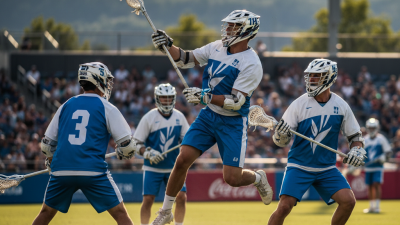
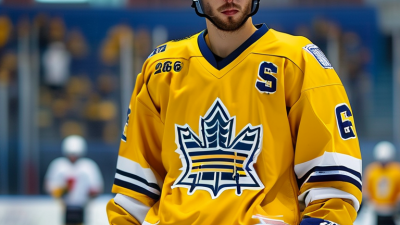
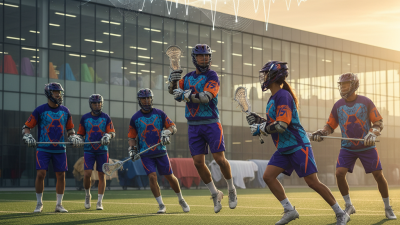
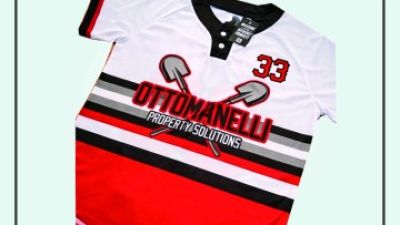
Picking the right Lacrosse Sportswear supplier isn’t just about getting a good look for your team gear — it really impacts how comfortable players are, how your team feels or looks, delivery times, and even costs in the long run. A dependable partner should offer more than just pretty pictures on their site. They need to get the whole picture — like how shoulder movement works during play, how they handle repeated contact, moisture management, and what the training fields demand.
In real-world sourcing, it’s often the details that reveal what these suppliers are really capable of. Ask about fabric weight, stretch recovery, how strong the stitching is, if the colors stay true over time, and whether sizes stay consistent across batches. And don't forget to request physical samples before you commit to a big order. Feel the fabric, examine the seams — a slick-looking sample can still hide flaws in production if you don’t do your homework. Independent testing and clear inspection standards are your best friends here.
Looking back, our first short-list was way too narrow — we focused mainly on price, and we kinda underestimated how fast communication would be. That mistake ended up causing delays when we needed revisions on samples. So, just because a quote is lower doesn’t automatically mean it’s a better deal. It's smart to check on their production capacity, minimum order quantities, what they can customize, have all their compliance docs ready, and understand their policies on replacements. Also, find out how they handle late shipments or inconsistent sizing. Getting references from well-known clubs can help, but don’t rely solely on that — do your own legwork.
This guide offers seven practical tips to help you compare Lacrosse Sportswear suppliers more confidently. It covers key stuff like product expertise, transparency in manufacturing, quality assurance, ethical sourcing, and customer support. Expect to ask more questions than you might think — and that’s actually a good thing. Taking the time to evaluate thoroughly means your team will get durable gear that performs when it counts, plus it clearly shows who they are.

A clear requirement sheet prevents expensive sampling mistakes. The 2024 SFIA Topline Participation Report recorded over 2.7 million lacrosse participants in the United States during 2023. That scale demands consistent sizing, durable stitching, and repeatable production. Define player age, climate, competition level, and garment quantity before contacting suppliers. A hot-weather team may need lightweight mesh, while cold-weather players may require brushed layers. Measure sleeve length, torso fit, and shorts mobility with real athletes, not guesses.
Tip: Specify fabric performance. The 2024 Textile Exchange Materials Market Report states that polyester represented about 57% of global fiber production in 2023. For Lax Sportswear, request fabric weight, stretch recovery, moisture management, and colorfastness data. Ask for laboratory reports, not vague claims. Check seam strength around shoulders and inner thighs. Those areas often fail first. A practical detail matters: test uniforms after repeated washing, then record shrinkage and fading. The requirement sheet can still be incomplete.
Tip: Build a supplier scorecard with measurable standards. Include sample accuracy, minimum order quantity, lead time, replacement handling, and communication speed. Request a pre-production sample in the actual size range. One sample is not enough. Compare movement during sprinting, checking, and bending. Also document acceptable defects with photographs. This feels slower, but it exposes weak assumptions before bulk production begins. Supplier certifications should be current, verifiable, and relevant to the requested materials.
Tip 1: Request physical samples before discussing large orders.
Product photos often hide uneven stitching, thin panels, or weak elastic recovery. Check the fabric after repeated stretching. A reliable supplier should explain its fiber blend, fabric weight, and production tolerance clearly.
During a supplier review, rub the garment against a rough surface and inspect the seams. Lacrosse players slide, sprint, and make sudden contact, so loose threads can become practical problems. Ask for colorfastness, shrinkage, and moisture-management test results. Independent laboratory reports are more useful than vague quality claims.
Tip 2: Compare material standards across suppliers, not just prices.
Polyester may feel similar, yet differ greatly in breathability and durability. Ask whether each batch follows the approved sample. I once trusted a promising prototype, but the bulk fabric felt stiffer. That mistake changed my checklist. Small details matter.
Suppliers should provide inspection records, measurable tolerances, and traceable production information. If a supplier avoids specific answers, pause the evaluation. Reliable communication is part of product quality.
Choosing a lacrosse sportswear supplier requires more than checking fabric samples. Customization and design support often determine whether uniforms perform well on the field.
Ask how much control you receive over patterns, colors, names, numbers, and trim. Reliable suppliers should provide digital mockups before production. Request exact measurements for shoulder width, sleeve length, and torso fit. Lacrosse players need freedom around the arms and shoulders. A tight neckline can become uncomfortable during repeated contact. Small details matter.
Compare fabric choices carefully. Lightweight mesh may improve airflow, while reinforced panels can handle frequent washing. Ask whether the supplier tests colorfastness and stitching strength. Their answers should be specific, not vague. Design support should include practical advice, not only attractive graphics. A skilled designer may adjust artwork for sublimation, embroidery, or heat transfer. Keep logos readable from a distance.
Review how revisions work. Some suppliers include several mockup changes, while others charge for every adjustment. Clarify sample costs, production timelines, and approval procedures in writing. I once overlooked sleeve numbering during a design review; it caused unnecessary corrections. That mistake still influences how I evaluate suppliers. Good communication helps, but it cannot replace technical knowledge. A supplier experienced with Soccer Sportswear may offer useful ideas, yet lacrosse cuts and protective gear require separate fitting judgment. Ask for a physical sample when possible. Digital previews can hide awkward seams.
A reliable lacrosse sportswear supplier should treat fit as performance equipment. Ask for a detailed size chart, including chest, waist, inseam, and sleeve measurements. Do not trust labels alone. Measure players while wearing base layers or protective equipment. Request graded samples in several sizes. Compare actual garment measurements with the supplier’s chart. In team fittings, I have seen two “medium” shirts fit very differently. That mistake can restrict a player’s shoulders during a hard sprint.
Test movement before placing a large order. Players should run, crouch, raise their arms, and rotate their torsos. Check whether waistbands roll, sleeves ride upward, or fabric catches on pads. Inspect stitching around shoulders, hips, and pocket openings. Ask about fabric stretch, moisture management, and washing shrinkage. A shirt may feel comfortable for five minutes, then become irritating during a long practice. Comfort is not just softness.
Fit also affects purchasing risk. The National Retail Federation and Appriss Retail reported $743 billion in U.S. merchandise returns during 2023, representing 14.5% of retail sales. Apparel sizing problems can contribute to this costly pattern. The Sports & Fitness Industry Association reported 242.6 million Americans participated in at least one sport or fitness activity in 2023. That broad participation highlights the need for inclusive grading, not one “average” athlete. Ask suppliers for fitting records, alteration guidance, and a clear replacement process. Keep player feedback, even when it exposes your own poor assumptions.
| Tip | Evaluation Area | What to Verify | Practical Benchmark | Recommended Evidence | Priority |
|---|---|---|---|---|---|
| 1 | Check the Size Chart | Confirm that measurements are listed for chest, waist, hip, inseam, sleeve length, and garment length rather than relying only on generic S–XXL labels. | Measurements should be shown in both inches and centimeters, with clear instructions for measuring the body and comparing results with the garment chart. | Current size chart, measuring guide, sample measurements, and a written explanation of how sizes are graded. | High |
| 2 | Test Fit With Samples | Evaluate shoulder mobility, armhole comfort, torso length, waistband security, and the amount of room needed for protective equipment. | Players should be able to run, bend, raise both arms, and wear required pads without binding, excessive pulling, or exposed midriff. | Pre-production samples tested by multiple players across relevant body sizes and positions. | High |
| 3 | Review Fabric Performance | Verify moisture management, breathability, stretch recovery, abrasion resistance, and colorfastness after repeated washing. | Fabric should support unrestricted movement, dry reasonably quickly, and retain shape and color after care-label washing. | Fabric composition, technical specifications, wash-test results, and care instructions. | High |
| 4 | Confirm Seam and Construction Quality | Inspect stitching density, reinforced stress points, seam flatness, hems, elastic areas, drawcords, and printed or stitched decoration. | High-stress areas such as shoulders, side seams, crotch seams, and waistbands should be securely finished and free from loose threads or sharp edges. | Close-up product photos, construction samples, quality-control checklist, and defect-replacement policy. | High |
| 5 | Assess Comfort and Coverage | Check collar height, tag placement, inner seams, waistband pressure, ventilation zones, and coverage during active movement. | Contact areas should not create rubbing or pressure points, and the uniform should remain secure during sprinting, cutting, checking, and shooting. | Wear-test feedback from players, photographs during movement, and a documented process for correcting fit issues. | High |
| 6 | Verify Youth and Inclusive Sizing | Determine whether the range accommodates youth players, different body proportions, and separate cuts where needed. | Avoid assuming that adult sizes can be scaled down accurately; compare actual measurements for youth, women, and unisex patterns when applicable. | Separate size charts, sample availability, fit notes, and the supplier’s alteration or exchange procedure. | Medium |
| 7 | Measure Consistency and Replacement Support | Review size consistency between production batches, replacement-item availability, lead times, and the process for handling incorrect sizes. | Written tolerances should be provided for key measurements, and replacement sizes should be trackable through order records and team size lists. | Pre-shipment inspection report, approved sample, measurement tolerance policy, reorder terms, and documented return procedure. | Medium |
Choosing a lacrosse sportswear supplier requires more than attractive samples. Production capacity determines whether your team receives uniforms before opening day. Ask for current monthly output, active orders, staffing levels, and machine availability. Request evidence, not broad promises. A reliable supplier can explain how many jerseys and shorts it completes weekly. Visit the cutting and sewing areas if possible. Look for organized fabric rolls, labeled work orders, and realistic production schedules. “We Are Sportswear” should mean a production partner, not merely a slogan.
Delivery reliability deserves equal attention. Ask for the average lead time across the last six months, not the best case. Check whether the timeline includes fabric sourcing, decoration, inspection, and packing. Request anonymized shipment records or on-time delivery data. A supplier should describe its response to delays, machine breakdowns, or fabric shortages. Clear escalation contacts matter when tournament dates cannot move. Build a seven-to-ten-day buffer. Ideal schedules often fail.
Before placing a large order, test the system with a small production run. Track approval dates, size accuracy, stitching quality, carton labels, and dispatch updates. I once trusted a confirmed ship date without checking fabric availability; the order arrived two weeks late. That mistake changed my review process. Now I request weekly progress photos and written milestone confirmations. Still, photos can be outdated. Independent inspections and signed pre-shipment checklists provide stronger proof. Compare capacity claims with actual performance over several orders, especially during peak season.
7 Tips for Choosing Lacrosse Sportswear Suppliers
Examine Pricing, Minimum Orders, and Payment Terms
A low unit price can hide freight, sampling, packaging, and revision costs. I once accepted the cheapest quote. The final cost was higher. Compare landed costs, not catalog prices. Request a written breakdown for jerseys, shorts, embroidery, delivery, and replacement pieces. The 2023 NRF and Appriss Retail report estimated US retail returns at $743 billion, or 14.5% of sales. That figure supports careful size sampling and quality checks before bulk production.
Minimum order quantities deserve equal attention. A supplier requiring 500 sets may offer a better price, but that quantity can trap cash in slow-moving sizes. Ask whether colors, sizes, and customization count separately. Request a pilot order of 20 to 50 sets when possible. Check fabric performance after washing, especially around shoulder seams and elastic waistbands. Small orders may cost more. They can reduce expensive mistakes.
Payment terms reveal operational maturity. Compare deposits, milestone payments, balance timing, currency charges, and refund conditions. A practical structure might use a deposit, approval payment, and balance after inspection. The Federal Reserve’s 2024 Small Business Credit Survey reported that 59% of small firms applied for financing during the previous year. Cash flow matters. Do not promise payment dates your club cannot meet. Also, do not accept vague delivery terms. Ask for invoices, inspection records, and late-shipment remedies in writing. My own weak point is negotiation impatience. A cheaper contract is not useful when the terms are unclear.
Use these practical screening benchmarks to compare supplier options before requesting formal quotations. Actual pricing, minimum order quantities, deposits, and lead times vary by fabric, customization, and order volume.
How to read the chart: Lower minimum orders reduce inventory risk, while lower deposits improve cash-flow flexibility. A balanced supplier usually offers moderate order quantities, a deposit near 30%, and a bulk production lead time of about 30 days.
A supplier’s reputation should be tested, not assumed. Request two recent buyer references, production photos, and shipment records. Search for repeated complaints about late replies, inconsistent sizing, or unclear invoices. A polished website proves very little. Ask for evidence. During a sample review, inspect zipper movement, seam strength, fabric recovery, and printed numbers. For Sportswear Jackets, check whether the collar stays flat after washing. Small defects become visible under stadium lights.
Service quality matters when match dates are fixed. Ask how quickly the supplier answers technical questions and handles replacement requests. Request one named contact, response-time targets, and an escalation process.
The National Retail Federation and Appriss Retail reported that 14.5% of U.S. retail sales were returned in 2023.
That figure includes many categories, but it highlights the cost of weak policies. Confirm size corrections, defective-item claims, inspection windows, and return freight responsibilities before payment.
Read every policy like a coach reading a tournament rulebook. Check minimum order quantities, sample fees, revision limits, delivery tolerances, and cancellation terms. Ask whether materials can be substituted without written approval. I would also request a small pilot order before committing to a full team. It may feel slower. It is usually cheaper than correcting 200 mismatched jerseys. No supplier is perfect, and I would distrust anyone promising zero mistakes. Clear records, honest delays, and measurable remedies are more reliable than confident sales language.
Custom baseball team jerseys with full sublimation are becoming an increasingly attractive choice as sportswear trends continue to emphasize personalization, performance, and visual identity. Insights reflected in Grand View Research and Statista reports point to steady interest in customized athletic apparel, supported by growing participation in team sports, online ordering, and demand for flexible designs. Full sublimation printing allows names, numbers, colors, patterns, and team graphics to become part of the fabric, helping create a consistent appearance without heavy surface layers that may crack or peel.
This premium baseball jersey is designed to meet the practical needs of players at every level. Its lightweight, breathable fabric promotes airflow and helps keep athletes cool and dry during demanding games, while moisture-wicking performance supports lasting comfort through repeated movement. The athletic fit offers unrestricted mobility for batting, throwing, running, and fielding, while maintaining a professional on-field appearance. Durable construction makes the jersey suitable for regular practices, competitive matches, and team events, and the broad design flexibility of sublimation enables each squad to develop a distinctive look aligned with current customization preferences.
: Specify player ages, climate, competition level, garment quantities, and preferred fit. Measure real athletes. Record sleeve length, torso fit, and shorts mobility.
Ask for fabric weight, stretch recovery, moisture management, and colorfastness data. Request laboratory reports. Do not rely on broad performance claims.
Inspect shoulder and inner-thigh seams carefully. Wash samples repeatedly, then record shrinkage and fading. Stadium lights reveal small defects.
Usually not. Compare several sizes during sprinting, checking, bending, and other movements. One sample can hide sizing problems.
Track sample accuracy, minimum order quantity, lead time, replacements, and response speed. Photograph acceptable defects. The scorecard may still be incomplete.
Request two recent buyer references, production photos, and shipment records. Search for repeated complaints about delays, sizing, or unclear invoices. A polished website proves little.
Confirm size corrections, defective-item claims, inspection windows, and return freight responsibilities. Ask for one named contact and an escalation process. Written details prevent confusion.
A pilot order can expose mismatched colors, sizing errors, and weak stitching. It feels slower. That delay may cost less than correcting a large team order.
Be careful with unclear invoices, unsupported certifications, hidden substitutions, and unrealistic promises. No supplier is perfect. Honest delays are easier to manage than confident excuses.
Choosing the right Lacrosse Sportswear supplier requires more than comparing product catalogs. Start by defining your team’s needs, including uniforms, training apparel, fabrics, colors, quantities, and performance goals. Evaluate material quality, stitching, breathability, durability, and care requirements to ensure the products can withstand regular use. It is also important to review customization options, artwork support, color accuracy, and the supplier’s ability to create designs that match your team identity. Confirm size charts, fitting samples, and comfort features so players can move freely and perform confidently.
Before placing an order, examine the supplier’s production capacity, lead times, quality control procedures, and delivery reliability. Compare pricing, minimum order quantities, sample costs, and payment terms while considering the overall value rather than the lowest price alone. Finally, research customer feedback, communication standards, return policies, warranty coverage, and issue-resolution procedures. A dependable supplier should provide clear information, consistent service, and flexible support throughout the ordering process.