Leave Your Message
0%

When it comes to bulk orders for football uniforms, a lot hangs on the little things—think consistent sizing, strong stitching, easily readable numbers, and reliable delivery. Sure, having a sleek design is important, but it won’t save jerseys that don’t fit right or pants that restrict movement. In this guide, I’ve looked at 10 different football uniform options perfect for teams placing large orders. We’re focusing on performance, custom options, price, and whether they’re easy to reorder consistently. But honestly, fit is king—those small details really do matter.

Looking at the numbers, the National Federation of State High School Associations’ 2023–24 High School Athletics Participation Survey shows there are over a million kids—specifically 1,031,508—playing 11-player football. That shows why dependable ordering, clear size charts, and designs that can be easily duplicated across an entire squad are super important. Plus, the Sports & Fitness Industry Association’s 2024 Topline Participation Report tracks trends like flag football too. Both reports give good context, but they don’t really tell you about the quality of different brands or specific supplier reliability.

What I’ve focused on in the picks coming up are features you can actually check—fabric weight, how well moisture wicks away, reinforced seams, customization options, whether samples are available before buying in bulk, and delivery time frames. Always request a sample first before placing a big order, and double-check how names, numbers, and replacements will match up later on. There’s also a thing to watch out for: the lowest price per unit might look tempting, but it could end up costing you more in the long run if there are sizing issues or if you need to re-order. Some folks even search for “Football Football Shirts” (though that’s not really common terminology in the US), but make sure to look for real proof of quality behind the glossy photos, not just pretty pictures.

If you keep these things in mind, you’ll be way more confident about choosing the right uniforms for your team.
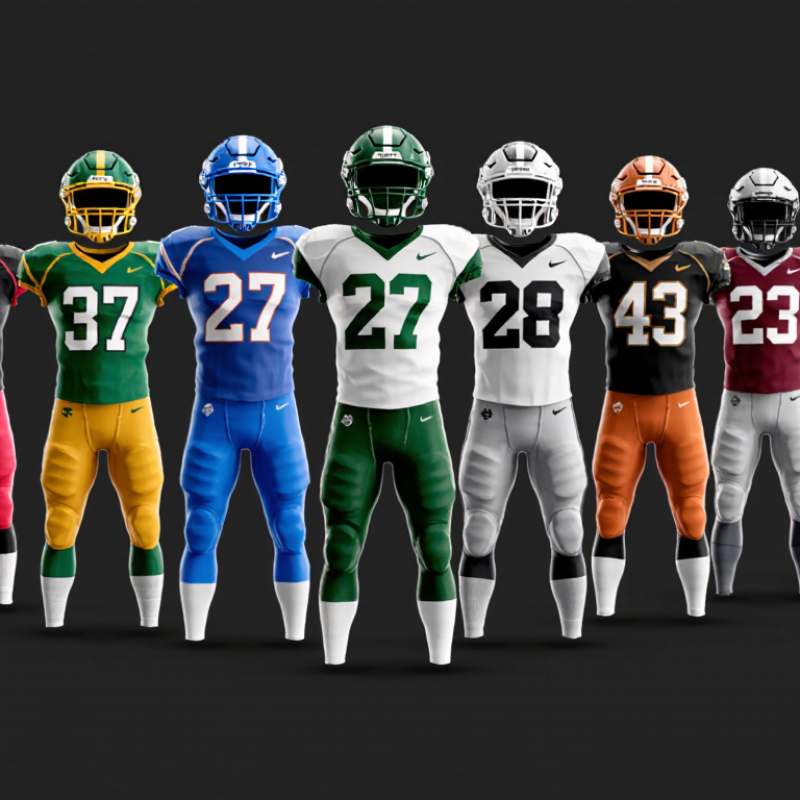
10 Best Football Uniforms for Bulk Team Orders

How Football Uniforms Combine Protection, Fit, and Team Identity

A football uniform must work with the pads, not merely look sharp on a hanger. A jersey that pulls across the shoulders can restrict movement; loose sleeves may catch or bunch under equipment. The CDC estimates 1.6 to 3.8 million sports- and recreation-related concussions occur annually in the United States. That broad estimate covers many activities, not football uniforms specifically. Still, it is a reminder that jerseys cannot replace properly fitted helmets, pads, or trained medical care.

Fit matters. Check sizes with players wearing their usual protective gear, and test arm movement before approving a bulk run.

Team identity also depends on practical choices: readable numbers, consistent colors, and fabric that stays comfortable through repeated drills. The NFHS 2023–24 participation survey counted more than one million boys playing 11-player high school football in the United States, underscoring the range of body sizes a team order may need to accommodate. For buyers comparing Football Jersey Football options, request a size set and inspect stitching, seams, and number visibility under field lighting. A chart alone can mislead. I would also leave room for exchanges; even careful measurements miss a few players. When protection, fit, and visual consistency are reviewed together, the uniform supports the team without pretending to prevent injuries.

What to Consider Before Placing a Bulk Uniform Order

Before comparing football uniforms for a bulk order, confirm the roster and collect each player’s measurements. Use a consistent measuring method, and check whether the size chart lists body measurements or garment measurements. Ask for sizes in writing; a quick message can prevent a costly mismatch. A few extra uniforms may help cover late roster changes, but order them only after checking your budget.

Review fabric weight, ventilation, stitching, and care instructions. Players may wear uniforms in heat, rain, or under pads, so comfort matters beyond appearance. Confirm league requirements for numbers, colors, and placement before approving artwork. One overlooked detail can mean reordering an entire set. It happens.

Ask about minimum quantities, personalization costs, sample options, and delivery dates. Get a final proof showing names, numbers, colors, and logos, then have a coach and team representative check it independently. If possible, test one sample during practice. It may reveal a tight shoulder or a number that is hard to read from the sideline. Build extra time into the schedule, especially when the roster is still changing. Even careful planning misses something sometimes, so decide who can approve small changes before production begins.

How Fabric and Construction Affect On-Field Performance

For bulk team orders, fabric choice can shape comfort as much as appearance. Polyester knits are popular because they dry quickly and hold their shape through repeated washes. Mesh panels can improve airflow across the back and underarms, where heat tends to build during play. Still, lighter fabric is not automatically better. A very thin knit may snag more easily or feel less protective during contact. Check fabric weight, stretch, and care instructions before choosing one uniform for the whole squad.

Construction matters once players start moving. Reinforced seams at the shoulders and sides can better handle reaching, blocking, and frequent washing. Flat or smooth seams may reduce rubbing beneath pads, though the result depends on fit and equipment. Sleeves should allow a full arm raise without pulling the body of the jersey upward. Fit matters, too. One overlooked detail is size variation: two jerseys marked the same size can feel different across cuts. Requesting a sample can reveal issues before a large order is placed.

Tips: Ask for fabric and seam details, then test a sample during warmups. Check mobility, ventilation, and how the jersey feels over pads. Wash it as directed and inspect the seams afterward. Small details matter. A quick test may not predict an entire season, but it can catch obvious problems early.

Which Customization Options Create a Unified Team Look

A unified football look starts with a simple, repeatable color plan. Choose one primary color, one trim color, and a neutral shade for numbers. Carry that palette across jerseys, pants, socks, and warm-up tops. Keep it consistent. For bulk team orders, request a physical color sample when possible; screens can shift shades. Use the same number font, size, and placement on every jersey. Names, sleeve stripes, and collar accents should support the design rather than compete with it. That is often enough. It is tempting to add another detail, but too many competing elements can make a team look less coordinated.

Pants need attention too. Match the waistband and side panels to the jersey trim, then check colors under field lighting. Some catalogs use the repeated phrase “Football Pants Football Pants.” Confirm the actual cut, padding, and color options before approving quantities. Ask for a proof with front, back, and side views, along with a size run. A sample can reveal awkward details, such as a number partly hidden by a shoulder seam. Do not assume every garment fits identically; fabric and pattern changes can affect sizing. That detail matters. Clear specifications help, but leave room to adjust one element after players try on the sample.

10 Football Uniform Styles for Bulk Team Orders

Bulk football orders work best when the style suits the team’s colors, playing conditions, and budget. Ten useful options include traditional stripe, solid-color, color-block, throwback-inspired, gradient, sublimated graphic, mesh-panel, contrast-sleeve, number-forward, and reversible designs. Traditional stripes look familiar on the field, while solid colors make names and numbers easy to read. Color-block and contrast-sleeve styles add visual separation without making the jersey too busy. A throwback-inspired look can feel distinctive, but check that its lettering remains clear from the stands.

For hot practices, mesh panels may improve airflow; however, ask for fabric details before ordering, since “breathable” can mean different things. Gradient and sublimated designs allow more detailed artwork, though small graphics may not look as crisp on every fabric. Number-forward jerseys prioritize visibility, while reversible styles can serve as practice pinnies, provided both sides have readable numbers. If you are comparing search terms such as “Football Jersey Football Jersey,” focus on fit charts, fabric weight, and sample approval instead of wording alone. Request a size run or sample first. It adds a step, and teams sometimes skip it, then discover that sleeves or torso lengths vary more than expected. Confirm names, numbers, and sizes in one shared order sheet before production.

How to Coordinate Sizing, Budget, and Delivery Dates

A bulk order of Football Uniforms runs more smoothly when sizing starts with a verified roster, not last season’s list. Ask each player for current measurements, and record chest, waist, and inseam separately. Sizes can vary between cuts, so check the supplier’s size chart and order a sample set when time allows. Try samples over the pads players will wear. A jersey that fits over a T-shirt may feel tight on game day. Keep one person responsible for collecting updates; scattered messages invite errors.

Set the budget before choosing extras such as custom names or additional practice tops. Price the full order, including shipping, setup fees, and a small allowance for replacement sizes. Request a written delivery estimate and work backward from the first practice, not the opening game. Leave time for artwork approval, production, and a final count. Even a careful spreadsheet cannot prevent every late roster change. I would leave a few spare sizes; that can feel like an unnecessary cost until someone needs one.

Tips: Use one shared roster with player names, measurements, sizes, and payment status. Confirm the final count in writing before production. Build in a buffer of at least a week, and check the delivery address twice.

FAQS

How can a team create a unified football uniform look?

Choose one main color, one trim color, and a neutral shade for numbers. Repeat them across jerseys, pants, socks, and warm-up tops. Keep it simple.

Which design details help uniforms look consistent?

Use the same number font, size, and placement on every jersey. Names, sleeve stripes, and collar accents should support the palette, not compete with it.

Why should teams request a physical color sample?

Screens can show colors differently from the fabric. A physical sample lets you check the shade before approving a large order. Field lighting can change how colors appear, too.

What should teams check on football pants?

Confirm the cut, padding, and available colors. Match the waistband and side panels to the jersey trim. Review front, back, and side views before approval.

How can teams avoid sizing problems?

Collect current chest, waist, and inseam measurements from each player. Check the size chart and try samples over the pads players will wear. A jersey over a T-shirt may fit differently.

What is the best way to manage roster updates?

Keep one shared roster with names, measurements, sizes, and payment status. Assign one person to collect changes. Scattered messages make errors more likely.

How should a team plan its uniform budget and delivery date?

Include shipping, setup fees, and a small allowance for replacement sizes. Request a written delivery estimate, then work backward from the first practice. Leave time for artwork approval and production.

Why keep spare sizes and a delivery buffer?

Late roster changes can happen, even with a careful spreadsheet. A few spare sizes may seem unnecessary until a player needs one. Build in at least a week, and check the delivery address twice. I may be overthinking that last check.

Conclusion

Choosing the right Football Uniforms for a bulk team order means balancing player protection, comfortable fit, durability, and a consistent team identity. This guide explains how fabric weight, stretch, breathability, reinforced seams, and construction details can affect movement and performance throughout a game. It also outlines what to review before ordering, including the team’s needs, expected use, available budget, and the range of sizes required.

Explore ten uniform styles suited to different team preferences, then consider how coordinated colors, numbers, names, and other design details can create a unified appearance. Careful planning helps teams compare options and avoid mismatched pieces. By confirming sizing, costs, customization choices, production timelines, and delivery dates early, coaches and organizers can make the ordering process more manageable and help ensure the uniforms are ready when the team needs them.
Liam

Liam

Liam is a seasoned marketing professional at GoldenLeaf Sports, a company renowned for its expertise in designing, manufacturing, and selling personalized sportswear, particularly through advanced digital sublimation printing techniques. With over 14 years of experience in the industry, he......
Previous How to Choose the Best Rugby Wear for Your Team